 01
01Prototype Strategy
Day 1–3We define what each prototype needs to prove. Different questions, different prototypes, we plan the most efficient path to your testing objectives.
OutputPrototype plan with build types, materials, and test criteria.

[ PROTOTYPING ]
We build prototypes that answer specific questions: does the form feel right in the hand, does the assembly fit together, does the firmware survive a real-world environment. Foam to functional, 24-hour FDM to field-tested batches of 200, every build is scoped against what you actually need to learn.
300+ prototypes built. 15+ processes used. 48-hour fastest turnaround. Prototyping behind SolarSmart Mower, Orphey, and KORU.
[ IS THIS FOR YOU ]
[ A GOOD FIT ]
[ PROBABLY NOT ]
[ MATCHING TOOL TO QUESTION ]
The wrong prototype answers the wrong question, wastes time, money, or both. Here's how we think about matching the build to what you actually need to learn.

[ IN PRACTICE ]
SolarSmart Mower is a self-sustaining, fuel-free smart lawnmower destined for crowdfunding. The brief required a fully functional, field-testable prototype that could prove the product worked in the real environment it would ship into, not just on a workshop bench. We built a lightweight CNC chassis, integrated a 50W solar panel with intelligent power distribution, dual 40V lithium-ion batteries, soil and grass sensors, an automated fertilizer dispenser, and self-propulsion with a height-adjustable cutting deck. Then we took it to actual lawns to validate it cut, charged, navigated, and fertilized as designed.
50W
Solar with intelligent power
Dual 40V
Li-ion battery management
12 wks
CAD to field-tested cycle
Field-tested
On real lawns, not benches
[ POINT OF VIEW ]
Four principles that shape every prototype we build. Strong opinions about what makes a prototype worth its build, and what makes one a waste.

The most expensive prototypes are the ones that try to answer everything and end up answering nothing. We define the testing objective before the build begins, then we build only what's needed to answer that objective. Other questions get their own prototypes, sometimes faster, sometimes cheaper, always sharper.
Ergonomic decisions made on a screen are wrong half the time. We test physical mass distribution, grip geometry, and tactile feedback in foam before any rendered model gets approval. If the foam doesn't feel right in the hand, the digital model doesn't matter.
 FoamCAD
Discovering a fitment issue, an interference, or a failed assembly sequence on a prototype costs hours. Discovering it on production tooling costs months. We front-load physical validation aggressively. Every issue found in the prototype phase is an issue not paid for at the factory.
Most prototype shops deliver something rough that proves the engineering and stops there. Stakeholder buy-in lives in the finishing: paint, surface quality, badge alignment, accurate CMF. A prototype that looks like a real product gets believed. One that looks like a clay model gets second-guessed.
[ INSIDE THE WORKSHOP ]
Renders are someone else's job. This is the bench, the chassis, the finish work, and the field photo of a build that survived contact with real users.


[ THE PROCESS ]
Five steps. Multi-prototype programs scoped separately. Every step documented in pictures, not just words.
01We define what each prototype needs to prove. Different questions, different prototypes, we plan the most efficient path to your testing objectives.
02Choosing the right manufacturing process based on accuracy needs, surface finish expectations, and timeline. We often combine multiple processes in a single prototype for the best result.
03In-house fabrication using our workshop facilities, supplemented by our network of specialist vendors for specific processes. Every part inspected before assembly, every assembly tested against the prototype's learning objectives.
04Structured testing against the requirements defined in Step 01. Dimensional inspection, functional testing, photographic documentation, formal test report. We document what worked, what didn't, and specific recommendations for the next iteration.
05Based on prototype testing, we provide prioritized design change recommendations with risk assessment for each. This feeds directly into the next design cycle.
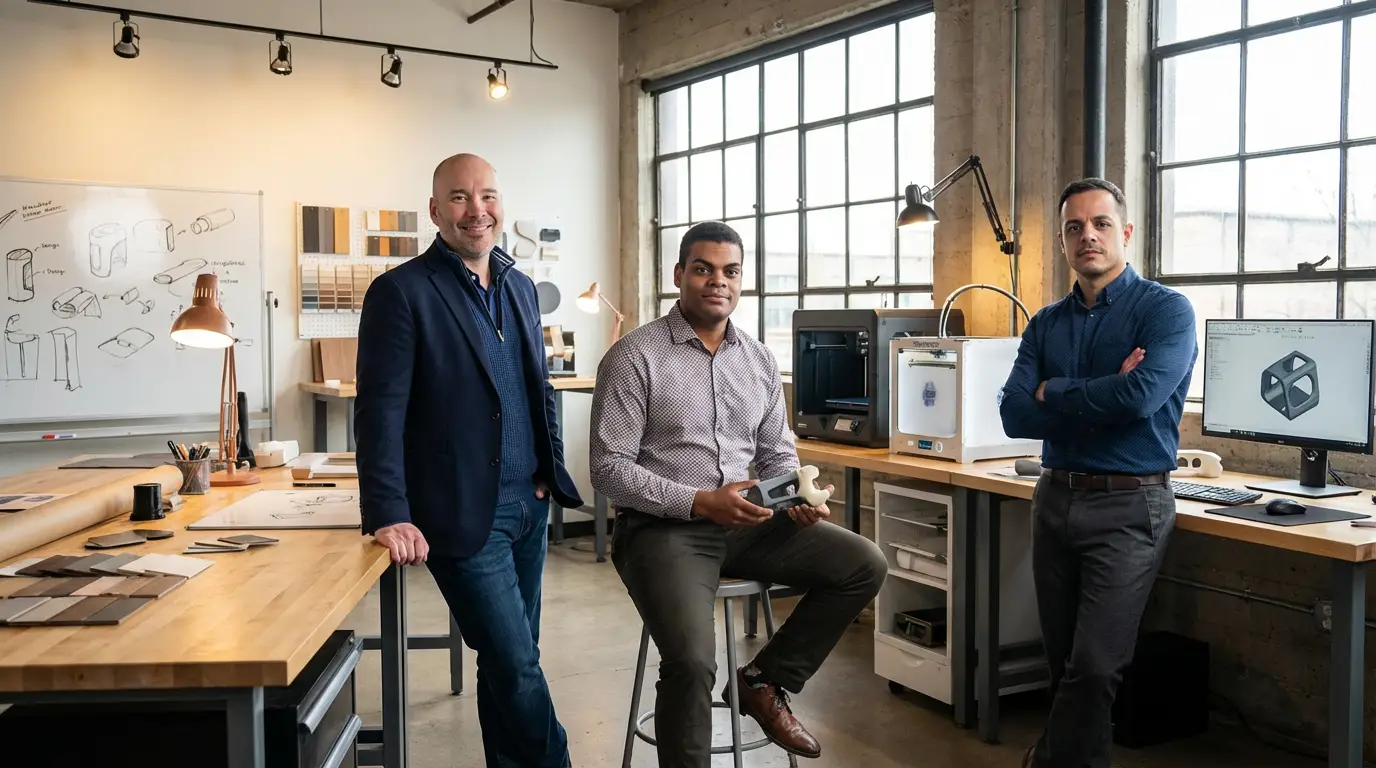
The ONMOTIO workshop team
Prototyping, fabrication, finishing
[ THE TEAM ON THIS ]
Our prototyping work is led from the workshop, not from a project management dashboard. On a typical engagement the team sizes to the build, anywhere from one technician for a single appearance model to four-plus for a fully integrated functional prototype with electronics.
We're hands-on through every build, including the finish work that separates a credible prototype from a rough demo. The same people who plan the prototype run the bench, finish the parts, and write the test report.
Eduardo Leardini, Head of Product Development
[ WHY ONMOTIO ]
Most prototype shops will print you a shell. We build prototypes that integrate the mechanical, the electronics, and the firmware, fully functional units that can be tested, demonstrated, and field-validated. No "imagine this part is working" demos.
Surface finish, paint, pad printing, assembly cleanup, the details that turn a build into something that gets believed. Stakeholder buy-in dies on rough prototypes; we don't ship rough.
We define what a prototype is for before we build it. The wrong prototype answers the wrong question. We help you scope the build against the actual decision it needs to enable.
Vacuum casting from silicone molds gives you 10–200 production-representative units without tooling, ideal for crowdfunding fulfillment, trade-show samples, early customer pilots, or user-testing at scale.
[ MORE PROJECTS ]
From cockpit ergonomics models through to chassis sub-assembly mock-ups validating the modular bolt-together architecture.
[ FAQ ]
You do. Once we deliver and you've paid the final invoice, all prototype IP and the physical units transfer to you. We retain only the right to feature the work in our portfolio with your approval.
Single appearance models start in the low four-figures. Functional integrated prototypes (mechanical plus electronics plus firmware) start in the low five-figures. Small-batch programs (10–200 units, vacuum-cast or soft-tooled) are scoped separately based on quantity and finish requirements.
For simple FDM prints, 24–48 hours. CNC-machined parts, typically 5–7 days. Fully assembled functional prototypes, 2–4 weeks depending on complexity and component lead times. We'll be honest about timeline at the discovery call.
Yes. Using vacuum casting from silicone molds we can produce 10–200 units of production-representative parts. Ideal for user testing, early sales, trade shows, and crowdfunding fulfillment.
Yes. We regularly build prototypes integrating custom PCBs, off-the-shelf development boards, sensors, displays, and full firmware, fully functional, not just cosmetic shells.
That's exactly why we prototype. Every build includes a structured test plan, and any issues are documented with root-cause analysis and specific design-change recommendations for the next iteration.
Yes. Mutual NDA before any project specifics. We can send ours, sign yours, or work from a mutual document.
[ NEXT MOVE ]
The first conversation is free and runs about 30 minutes. We'll cover what you need to learn, what kind of prototype actually answers that, and what the realistic timeline and budget look like. No deck, no sales pitch.


