[ Comprehensive Guide ]

    HOW TO DEVELOP A PHYSICAL PRODUCT: FROM IDEA TO MARKET

    A complete guide to the product development process, from concept brief to factory floor. By the engineering team at ONMOTIO.

    [ Quick Answer ]

    What is the process of developing a physical product?

    The process of developing a physical product involves six key stages: defining the product brief, exploring divergent design concepts, selecting and refining the final concept, developing detailed mechanical engineering specifications, building and testing physical prototypes, and preparing the finalized design for mass manufacturing. Each stage is designed to systematically reduce technical and commercial risk while transforming an abstract idea into a reliable, production-ready system.

    Introduction

    Developing a physical product is a complex, multi-disciplinary process that combines industrial design, mechanical engineering, prototyping, and manufacturing preparation. Whether you are a funded startup founder, an established entrepreneur, or an enterprise team launching a new hardware device, understanding this end-to-end process is critical to avoid costly tooling mistakes, supply chain delays, and market failure.

    Unlike software or digital products, physical hardware must navigate uncompromising real-world constraints: material properties, manufacturing tolerances, supply chain logistics, and physical performance under stress. This makes physical product development more demanding, requiring a highly structured, risk-mitigating approach from day one.

    This comprehensive guide breaks down the full lifecycle of developing a physical product, taking you from the initial concept brief to a fully manufacturable, market-ready device.

    [ The Process ]

    The 6 Key Stages of Product Development

    Every successful hardware product follows a structured path from abstract idea to factory-ready system.

    First stage

    Product Definition & Brief

    Transform a loose idea into an uncompromising, structured framework that dictates all subsequent engineering and design decisions.
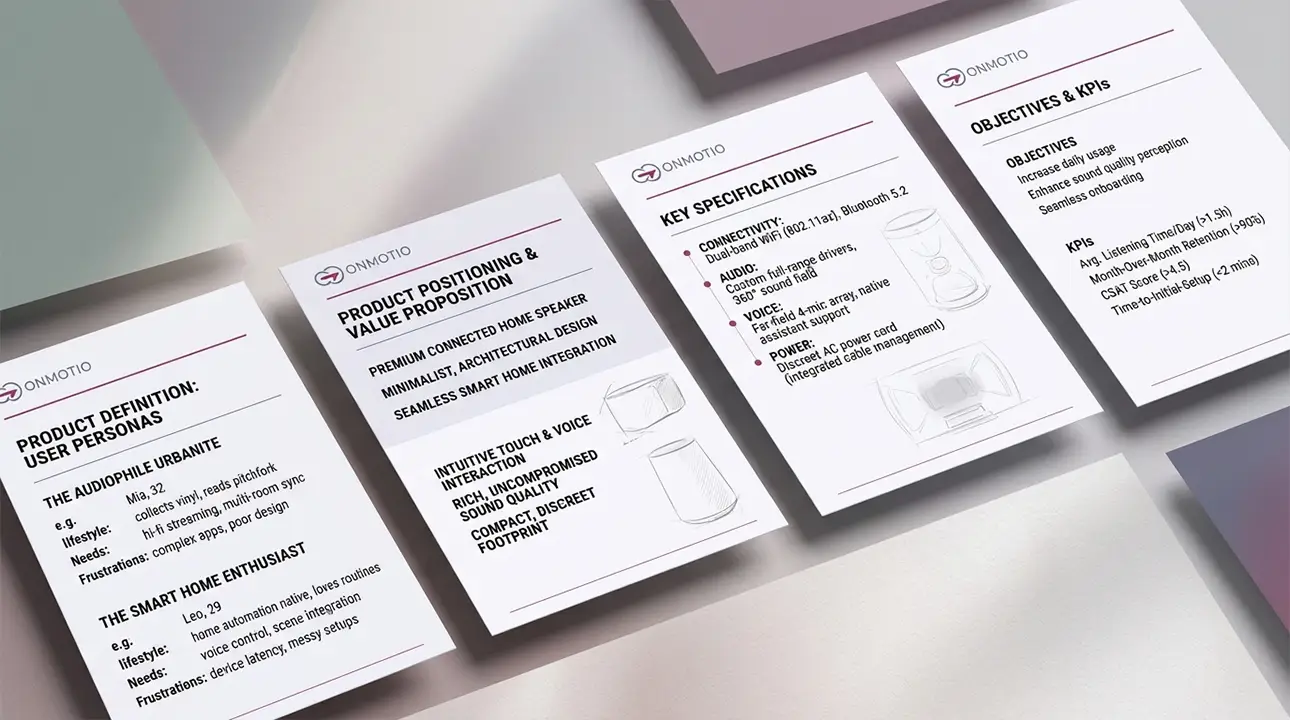
    Product Definition & Brief

    The graveyard of hardware startups is littered with products that began as a brilliant idea but lacked a rigorous definition. A physical product cannot pivot on a dime the way software can. In software, changing a core feature mid-development requires rewriting code. In hardware, changing a core feature mid-development requires throwing away physical prototypes, scrapping expensive steel molds, renegotiating supplier contracts, and delaying your launch by months.

    Because the cost of iteration rises exponentially as you move from concept to factory floor, the first stage of development must be ruthlessly precise. The goal of this stage is not to design a product; it is to define the absolute boundaries within which the product will be designed.

    The Product Requirements Document (PRD)

    The cornerstone of this phase is the Product Requirements Document (PRD). This is not a marketing brief; it is a technical contract between the founders, the industrial designers, and the mechanical engineers. A professional PRD translates vague aspirations ("it needs to be lightweight and durable") into measurable engineering metrics ("it must weigh less than 450 grams and survive a 1.5-meter drop onto concrete").

    The PRD serves as the single source of truth for the entire development lifecycle. It establishes the absolute boundaries within which the engineering team must operate. If a feature is not in the PRD, it does not exist. If a constraint is not in the PRD, it cannot be enforced later without severe financial penalties.

    Establishing the Commercial Envelope

    Engineering in a vacuum is dangerous. A product can be technically flawless but commercially unviable if it costs too much to manufacture. During the definition stage, the team must establish the Target Cost of Goods Sold (COGS).

    If the retail price of your device is 99, the COGS cannot exceed $50 to $60 if you intend to sell through retail channels while maintaining healthy margins. Establishing this target upfront dictates material choices, assembly methods, and component selection. It forces the team to make difficult trade-offs early: "We can use aerospace-grade aluminum, but it will push our COGS to $85. We must use a high-performance glass-filled polymer instead."
    Regulatory and Environmental Constraints

    Physical products exist in the real world, which means they are subject to real-world regulations and environmental stresses. Identifying these constraints early is critical. Does the device need to be waterproof? If so, what IP rating is required (IP67 vs. IP68), and how does that impact the mechanical sealing strategy? Will it be sold in Europe? If so, it requires CE marking, which dictates specific electromagnetic interference (EMI) limits for the internal electronics. Ignoring these requirements until the prototyping phase guarantees failure at the compliance testing laboratory.

    Key Deliverables

    Comprehensive Product Requirements Document (PRD), Target User Personas & Use-Case Scenarios, Established Target COGS, Regulatory & Certification Roadmap (UL, CE, FCC, FDA).

    Common Pitfalls

    Feature Creep (attempting to solve too many problems), Vague Metrics (using qualitative words instead of quantitative metrics), Ignoring the Supply Chain (relying on unproven internal components).

    What Success Looks Like

    A locked, uncompromising brief that aligns the founders, investors, and engineering team on exactly what is being built, who it is for, and how much it must cost to manufacture.

    Second stage

    Concept Exploration

    Explore the entire solution space through divergent industrial design, balancing human desirability with technical feasibility.

    Concept Exploration

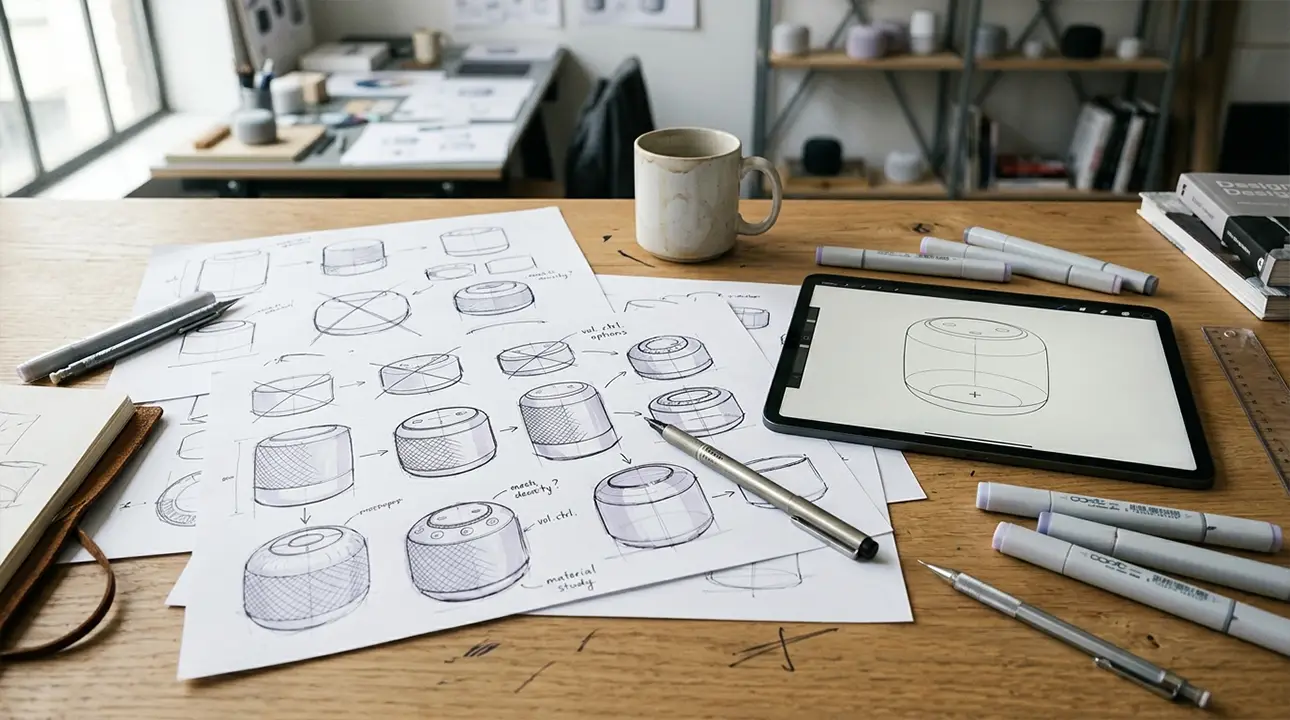
    With a rigid Product Requirements Document in place, the process transitions from definition to exploration. This is the stage where the abstract idea begins to take physical form. However, the objective here is not to immediately guess the "correct" final design. The objective is to explore the entire solution space broadly and divergently.

    In professional product development, arriving at the first obvious solution is rarely the goal. The first solution is usually the safest, most generic interpretation of the brief. True innovation requires pushing past the obvious to uncover novel form factors, unique user interactions, and unexpected architectural layouts.

    Divergent Ideation and Architectural Layouts

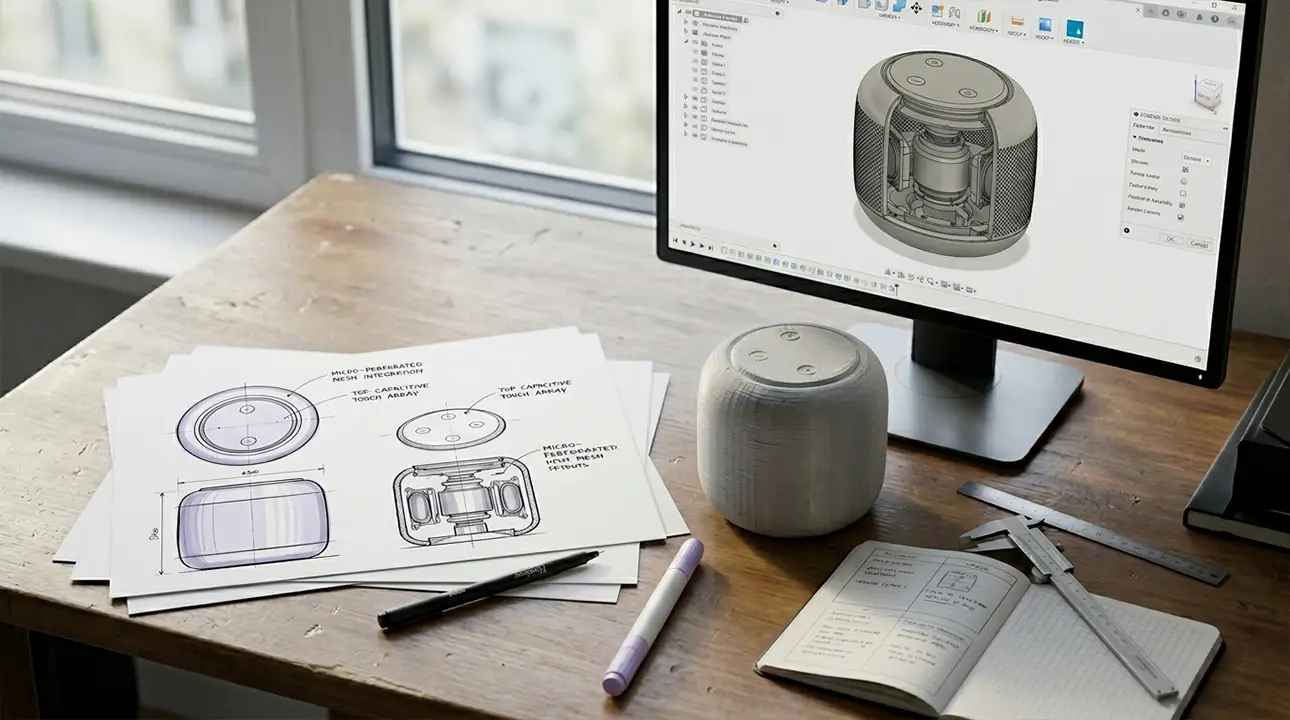
    Industrial designers and mechanical engineers collaborate to generate a wide array of concepts. These concepts are not merely stylistic variations (e.g., "the blue one vs. the red one"); they represent fundamentally different approaches to solving the problem defined in the PRD.

    For example, if the product is a wearable health monitor, one concept might explore a rigid, watch-like form factor prioritizing battery size, while another might explore a flexible, fabric-integrated form factor prioritizing sleep comfort.

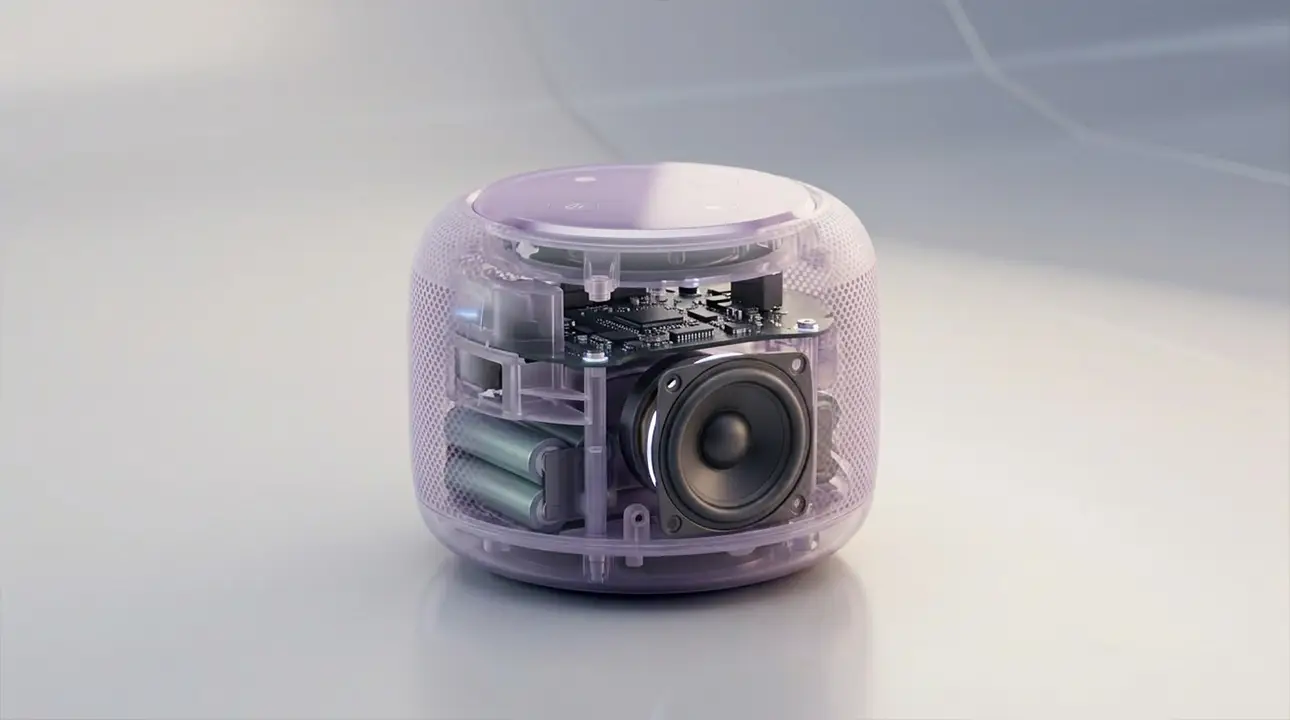
    Simultaneously, engineers develop rough architectural layouts. An architectural layout is a spatial puzzle: it proves that the required internal components (the printed circuit board, the battery, the sensors, the antennas) can actually fit inside the proposed exterior shapes without violating the laws of physics or causing thermal overheating.

    Visual Language and Brand Translation

    A physical product is the ultimate manifestation of a brand. During concept exploration, designers develop mood boards and visual language studies to ensure the product communicates the correct emotional resonance.

    Does the product need to look clinical, trustworthy, and precise (like medical equipment)? Or should it look warm, approachable, and seamless (like high-end consumer audio)? This visual language, including Color, Material, and Finish (CMF) strategies, must be defined early to guide material selection and manufacturing processes later.

    Ergonomics and Human Factors

    A product that looks beautiful on a screen but feels awkward in the hand is a failure. Concept exploration heavily involves human factors engineering. How does the user hold the device? Where do their fingers naturally rest? Is the center of gravity balanced, or does the device feel top-heavy?

    Designers use rapid, low-fidelity mockups, often carved from foam or quickly 3D printed, to test these ergonomic assumptions in the real world. A millimeter difference in a grip radius can be the difference between a product that feels premium and one that feels cheap.

    Key Deliverables

    Multiple Divergent Industrial Design Concepts, Internal Component Architectural Layouts, Visual Language & CMF Strategy, Initial Ergonomic Foam Mockups.

    Common Pitfalls

    Premature Convergence (falling in love with the first sketch), Designing the Impossible (creating shapes that cannot hold the electronics), Ignoring the Brand (designing a generic product).

    What Success Looks Like

    A robust portfolio of 3 to 5 distinct, viable design directions that challenge assumptions, inspire stakeholders, and prove that the internal architecture can support the exterior vision.

    Third stage

    Concept Selection & Refinement

    Evaluate divergent concepts against the engineering brief, harmonize aesthetics with mechanics, and converge on the final direction.

    Concept Selection & Refinement

    After the expansive, divergent thinking of Stage 2, the development process must pivot sharply toward convergence. You cannot take three different concepts into detailed mechanical engineering, the cost and time required would be astronomical. Stage 3 is the critical decision point where stakeholders must select a single, unified direction to carry forward into mass production.

    This selection process is rarely a simple vote for the "prettiest" design. It requires a ruthless, objective evaluation of each concept against the original Product Requirements Document (PRD) established in Stage 1.

    The Evaluation Matrix

    Professional engineering teams use weighted evaluation matrices to remove subjective bias from the selection process. Each concept is scored against the non-negotiable criteria:

    • Does Concept A meet the target COGS, or are its complex curves too expensive to mold?
    • Does Concept B provide the necessary internal volume for the required battery capacity?
    • Does Concept C meet the ergonomic requirements for the 5th percentile female user?

    Often, the final selected direction is a hybrid. The team might take the superior ergonomic grip of Concept A and combine it with the highly efficient internal thermal architecture of Concept B.

    "Looks-Like" Prototyping

    Before fully committing to the selected concept, the team must validate it in the physical world. This is achieved through high-fidelity "looks-like" prototypes.

    Unlike the rough foam models used in Stage 2, looks-like prototypes are highly finished. They are typically CNC-machined from dense model board or high-resolution SLA 3D printed, then meticulously sanded, painted, and finished to mimic the final mass-produced product. While these models do not contain functional electronics, they are essential for final executive approval, investor presentations, and early user focus groups. They answer the question: "Is this a product people actually want to buy?"

    Harmonizing Form and Function

    Once the single concept is locked, the industrial designers and mechanical engineers work closely to refine the details. This is the transition zone between design and engineering.

    The team begins to define parting lines (where two pieces of plastic meet), draft angles (the slight taper required to eject a part from a steel mold), and initial assembly strategies. A design that looked seamless in a sketch must now be broken down into individual, manufacturable components. The goal is to preserve the aesthetic intent of the design while ensuring it survives the brutal realities of the factory floor.

    Key Deliverables

    A Single Locked Industrial Design Direction, High-Fidelity "Looks-Like" Presentation Prototypes, Preliminary Part Break-out Strategy, Updated COGS Estimate.

    Common Pitfalls

    Design by Committee (combining conflicting features), Ignoring Manufacturing Realities (selecting impossible molding techniques), Skipping the Physical Review (approving solely on digital renders).

    What Success Looks Like

    Total stakeholder alignment on a single, highly refined design that is aesthetically compelling, ergonomically validated, and fundamentally prepared for the rigors of detailed mechanical engineering.

    Fourth stage

    Engineering & Development

    Execute rigorous mechanical engineering, 3D CAD modeling, and Design for Manufacturing (DFM) optimization to ensure mass-production viability.

    Engineering & Development

    Stage 4 is where the product is truly born. The beautiful concept approved in Stage 3 must now survive the brutal realities of physics, material science, and high-volume manufacturing. This is the longest, most expensive, and most technically demanding phase of physical product development. It is the bridge between "what it looks like" and "how it actually works."

    A design without rigorous mechanical engineering is merely a concept; this phase makes it a reality. If a hardware startup fails, it is almost always because this stage was rushed or executed by inexperienced engineers.

    Detailed 3D CAD Modeling and Mechanical Architecture

    The core deliverable of this stage is the complete 3D CAD (Computer-Aided Design) database. Using advanced parametric software like SolidWorks or PTC Creo, mechanical engineers build the product from the inside out.

    Every single component, from the exterior housing down to the smallest internal screw, is modeled to millimeter precision. Engineers design the internal mechanical architecture: the snaps, fits, living hinges, bosses, and ribs that hold the product together. They calculate load-bearing stresses, ensuring the device won't shatter when dropped. They design thermal management systems, ensuring the internal electronics don't overheat the plastic enclosure and burn the user.

    Electronics Integration and Material Selection

    A physical product is rarely just plastic and metal; it is usually a complex integration of mechanical and electronic systems. During this stage, the mechanical engineers work closely with electrical engineers to package the Printed Circuit Boards (PCBs), batteries, sensors, and antennas within the tight confines of the enclosure.

    Clearances must be meticulously managed. An antenna placed too close to a metal chassis will suffer severe signal degradation. A battery that swells slightly during charging needs expansion room, or it will crack the device open.

    Simultaneously, engineers finalize material selection. They specify the exact polymers (e.g., ABS, Polycarbonate, TPU), metals (e.g., die-cast aluminum, stamped steel), or composites based on required performance, weight, and the target Cost of Goods Sold (COGS) established in Stage 1.

    Design for Manufacturing (DFM)

    The most critical engineering practice in hardware development is Design for Manufacturing (DFM). DFM is the process of designing a product specifically for its intended mass-production method (e.g., injection molding, CNC machining, sheet metal stamping).

    A part that is easy to 3D print might be physically impossible to injection mold. DFM ensures that every plastic part has the correct draft angles (taper) so it can be ejected from a steel mold. It ensures uniform wall thickness to prevent the plastic from sinking or warping as it cools. By optimizing part geometry for the factory floor, DFM reduces expensive tooling costs, speeds up assembly time, and minimizes defect rates at scale.

    Key Deliverables

    Complete Parametric 3D CAD Database, Finalized Mechanical Architecture, Rigorous DFM Optimization, Integrated Electronics Packaging.

    Common Pitfalls

    Designing for 3D Printing Not Molding (creating impossible-to-mold parts), Ignoring Tolerances (parts that won't assemble), Siloed Engineering (PCBs that don't fit the enclosure).

    What Success Looks Like

    A fully engineered, millimeter-accurate digital twin of the product that is structurally sound, thermally managed, and completely optimized for high-volume mass manufacturing.

    Fifth stage

    Prototyping & Testing

    Physically validate the engineered design, test performance under stress, and iterate relentlessly based on real-world feedback.

    Prototyping & Testing

    You cannot validate a physical product purely on a computer screen. No matter how advanced the 3D CAD software or thermal simulation tools are, the physical world always introduces unexpected variables. Prototyping is the ultimate risk-reduction mechanism in hardware development.

    Skipping or rushing the prototyping phase is the single most expensive mistake a company can make. Catching a millimeter interference issue in a 3D-printed prototype costs a few hundred dollars to fix. Catching that same issue after you have paid $80,000 to cut hardened steel injection molds costs tens of thousands of dollars and months of delay.

    The Iterative Validation Loop

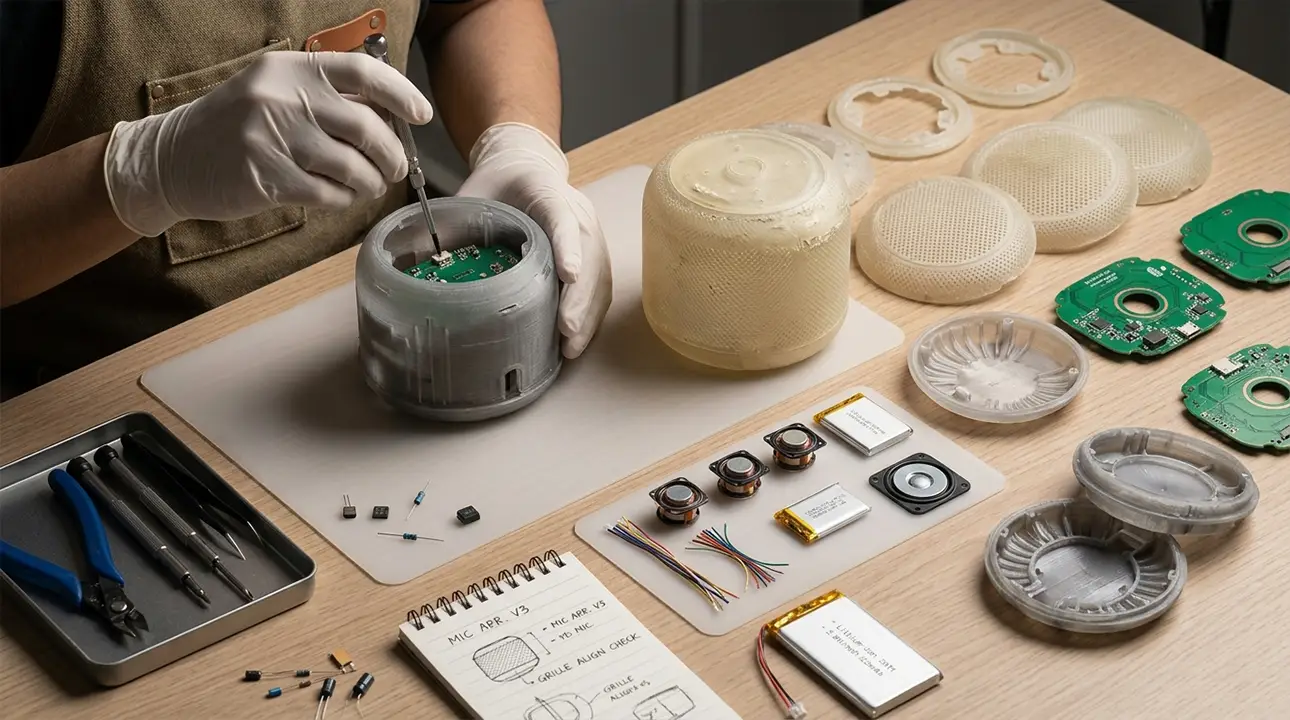
    Prototyping is not a single event; it is a continuous, iterative loop. Engineering teams build physical models to test specific assumptions, break them, learn from the failure, update the CAD, and build again.

    Early in the process, teams use rapid "works-like" prototypes. These might look ugly, often a mess of exposed wires and 3D-printed SLA or FDM plastics, but they prove that the core mechanical or electronic mechanism functions as intended. Does the hinge open smoothly? Does the button provide the correct tactile feedback? Does the device overheat under maximum load?

    EVT (Engineering Validation Test)

    As the design matures, the prototypes become increasingly sophisticated, following industry-standard hardware development phases. The first major milestone is EVT (Engineering Validation Test).

    EVT prototypes are built using the final intended materials (or very close approximations, like CNC-machined ABS instead of molded ABS) and the final custom PCBs. The goal of EVT is to prove that the product meets all the functional and performance requirements defined in the PRD. EVT units are subjected to brutal testing: drop tests, thermal cycling, water ingress testing, and continuous use cycles to identify any remaining design flaws before committing to mass production tooling.

    DVT (Design Validation Test)

    Once EVT is successful, the team moves to DVT (Design Validation Test). DVT units are the closest representation of the final product. Crucially, DVT units are often built using the first shots from the actual mass-production steel molds (the T1 samples).

    The goal of DVT is not just to test the design, but to test the manufacturing process itself. Are the molded parts within acceptable tolerances? Does the cosmetic finish meet the brand standards? DVT units are also the devices sent to regulatory labs for official CE, FCC, or UL certification testing, as the labs require production-intent hardware.

    Key Deliverables

    Iterative "Works-Like" Functional Prototypes, EVT (Engineering Validation Test) Units & Reports, DVT (Design Validation Test) Units & Reports, Physical Validation of Thermal & Mechanical Performance.

    Common Pitfalls

    The "One Prototype" Myth (assuming a single prototype will validate the entire design), Testing in a Vacuum (failing to test in the actual use environment), Ignoring the Results (pushing forward into mass production despite prototype failures).

    What Success Looks Like

    A thoroughly tested, physically validated product that functions flawlessly under stress, meets all regulatory requirements, and proves that the engineering CAD is ready for steel tooling.

    Sixth stage

    Manufacturing Preparation

    Finalize technical documentation, vet contract manufacturers, and orchestrate the transition from engineering studio to factory floor.

    Manufacturing Preparation

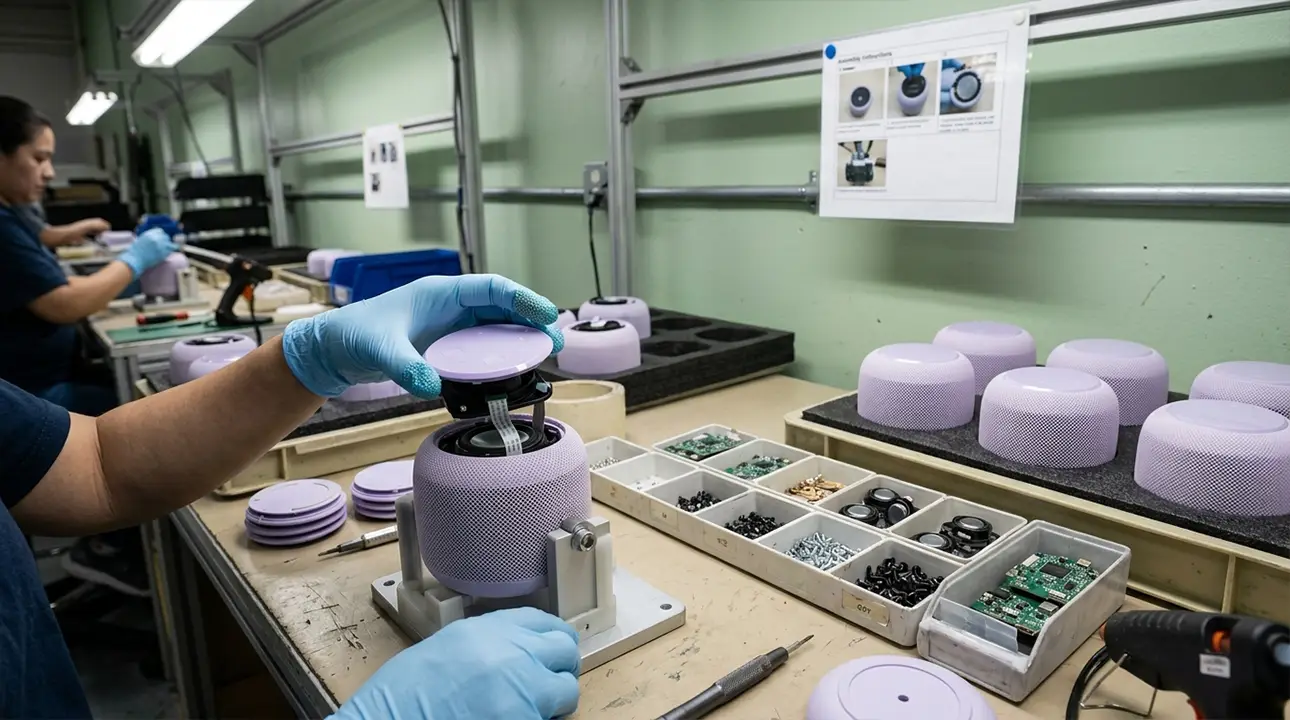
    The final stage is arguably the most complex logistical challenge in the entire process: transitioning the validated prototype into a mass-manufactured product. Moving from a prototype that works once in a lab to a product that can be manufactured ten thousand times flawlessly on an assembly line requires intense, meticulous preparation.

    At this stage, the product officially graduates from the engineering studio. The focus shifts from design and development to supply chain management, quality control, and factory orchestration.

    Finalizing the Technical Data Package (TDP)

    You cannot simply hand a 3D CAD file to a factory and expect a perfect product. The engineering team must generate a comprehensive Technical Data Package (TDP).

    The TDP includes the final 3D CAD database, but more importantly, it includes detailed 2D technical drawings. These drawings specify the acceptable manufacturing tolerances for every dimension, the required surface finishes (e.g., a specific mold texture or anodized coating), and the Critical-to-Function (CTF) dimensions that the factory's Quality Assurance (QA) team must measure on every batch. Without a rigorous TDP, you have no legal or technical leverage if the factory delivers sub-standard parts.

    The Bill of Materials (BOM) and Supply Chain

    Simultaneously, the team finalizes the Bill of Materials (BOM). The BOM is the master recipe for the product. It is an exhaustive, line-by-line spreadsheet listing every single component required to build one unit: every custom molded plastic part, every off-the-shelf screw, the PCB, the battery, the packaging box, and the instruction manual.

    For every item on the BOM, the supply chain must be validated. Who is the supplier? What is the Minimum Order Quantity (MOQ)? What is the lead time? A product is only as fast as its slowest component; a 12-week lead time on a specialized microchip will delay the entire production run.

    DFA and Factory Vetting

    Before mass production begins, the engineering team must optimize the design for assembly (DFA). DFA focuses on reducing labor time and minimizing errors on the factory floor. This might involve replacing five tiny screws with a single snap-fit mechanism, or designing parts so they can only be assembled in the correct orientation (poka-yoke).

    Finally, the team must select and vet the Contract Manufacturer (CM). This involves auditing the factory's capabilities, their quality control systems, their experience with similar products, and their capacity to scale. Once the CM is selected, the TDP is handed over, the steel injection molds are kicked off, and the first T1 samples are produced for final approval.

    Key Deliverables

    Comprehensive Technical Data Package (TDP) & 2D Drawings, Finalized Bill of Materials (BOM) & Supply Chain Validation, Design for Assembly (DFA) Optimization, Contract Manufacturer (CM) Vetting.

    Common Pitfalls

    The "Throw it Over the Wall" Approach (handing CAD to a factory without 2D drawings), Single-Sourcing Critical Components (relying on an unvetted supplier), Ignoring Assembly Time (designing a product that takes 45 minutes to assemble by hand).

    What Success Looks Like

    A fully documented, supply-chain-validated product in the hands of a trusted manufacturing partner, ready to scale from the first T1 sample to ten thousand flawless units.

    [ Timeline ]

    How Long Does It Take to Develop a Product?

    The timeline for developing a physical hardware product typically ranges from 6 to 18 months, depending heavily on the product's technical requirements, the complexity of the internal electronics, and the team's expertise.

    Hardware development cannot be rushed through "sprints" the way software can. You cannot download a physical prototype; you must wait for it to be machined, shipped, and assembled. The primary factors that drive the development timeline include:

    Product Complexity

    A simple molded plastic accessory (like a phone case) may take 4 to 6 months, while a complex IoT device requiring custom electronics, firmware, and multi-part mechanical enclosures often takes 12 to 18 months.

    Off-the-Shelf vs. Custom Components

    Products utilizing established, off-the-shelf internal components (like a standard Bluetooth module) move significantly faster than those requiring ground-up invention or custom PCB layouts.

    Ergonomic and Performance Demands

    Products with strict ergonomic requirements (like a wearable device) or extreme performance requirements may require more prototyping rounds, extending the timeline.

    Regulatory Certification

    Devices requiring FDA, UL, or complex CE certifications require built-in testing buffers that can add weeks or months to the schedule.

    [ Investment ]

    The Cost of Professional Product Development

    The cost of professional product development varies significantly based on the scope, technical complexity, and the level of engineering required for mass manufacturing. Developing hardware is capital-intensive; attempting to do it on a shoestring budget almost universally guarantees failure.

    For serious, market-ready product development, typical investment ranges include:

    $0,000+

    starting investment

    Early Ideation & Concept Design

    Initial research, sketches, concept exploration, and early feasibility analysis.

    0,000 – $25,000

    $0,000+

    starting investment

    Full Industrial Design & Mechanical Engineering

    Complete CAD modeling, mechanical engineering, material selection, and DFM optimization.

    $30,000 – $80,000+

    $0,000+

    starting investment

    Complete End-to-End Development (Including Prototyping & DFM)

    Full lifecycle from brief through prototyping, testing, and manufacturing preparation.

    $75,000 – 50,000+

    Serious product development requires real, committed investment. Projects with insufficient budgets fail due to incomplete mechanical engineering, skipped prototyping phases, or poor manufacturing preparation that leads to catastrophic factory errors. Defining a realistic budget early is critical for hardware startups and established brands alike.

    [ Pitfalls ]

    Common Mistakes When Developing a Product

    Many hardware projects fail not because the underlying idea is flawed, but because the execution process is undisciplined. Hardware is unforgiving. Common, costly mistakes include:

    • Skipping engineering and going straight to visuals: A beautiful concept rendering is useless if it defies the laws of physics or cannot be manufactured. Mechanical engineering must inform design from the very beginning.
    • Underestimating manufacturing complexity: Assuming that a 3D-printed prototype can immediately be mass-produced. Injection molding requires draft angles, uniform wall thicknesses, and specific tolerances that must be engineered into the CAD.
    • Ignoring Design for Manufacturing (DFM): Failing to optimize for the factory floor results in unnecessarily high part costs, slow assembly times, and high defect rates. A part that costs to make could cost $0.10 if properly engineered for DFM.
    • Moving to production tooling too early: Cutting steel molds before thoroughly testing high-fidelity EVT and DVT prototypes often results in tens of thousands of dollars in wasted tooling costs when flaws are discovered later.
    • Failing to define the PRD: Starting development without a locked Product Requirements Document leads to feature creep, blown budgets, and a product that tries to do too much but excels at nothing.

    [ Requirements ]

    What You Need to Build a Real Product

    Developing a successful physical product requires a multi-disciplinary approach. An idea alone is insufficient; you need a tightly integrated combination of highly specialized skills:

    01

    Industrial Design

    To ensure the product is visually compelling, highly usable, and desirable to the target market. Industrial design bridges the gap between human psychology and physical form.

    Learn more
    02

    Mechanical Engineering

    To ensure the product is structurally sound, functions reliably, and meets all technical requirements. Engineering translates the designer's vision into a mathematically proven reality.

    Learn more
    03

    Electronics & Firmware

    To design the "brain" of the device. This requires custom PCB layout, component sourcing, antenna tuning, and the firmware code that makes the hardware function.

    Learn more
    04

    Prototyping Expertise

    To physically validate the design and uncover hidden flaws through rigorous testing. Prototyping requires access to CNC machines, 3D printers, and model makers.

    Learn more
    05

    Manufacturing Knowledge

    To bridge the gap between a prototype and a product that can be efficiently mass-produced at the target cost. This requires deep knowledge of supply chains, tooling, and factory orchestration.

    [ Partnerships ]

    When Should You Work With a Product Design Agency?

    For funded startups, scale-ups, and enterprise teams, working with a specialized product design and engineering partner is the most effective way to reduce technical risk, accelerate time-to-market, and ensure manufacturing viability.

    You should consider partnering with an agency when:

    • You have secured funding and need to move from a rough proof-of-concept to a structured, highly engineered product ready for mass production.
    • Your internal team lacks specialized hardware expertise (e.g., you are a software company building your first physical device, or a marketing brand launching a consumer product).
    • You require a seamless integration of industrial design, mechanical engineering, and manufacturing preparation under one roof, rather than trying to manage five different freelance contractors.

    An experienced partner like ONMOTIO helps you avoid the "hardware is hard" pitfalls, ensuring your product is built on a foundation of rigorous engineering rather than guesswork.

    [ Our Approach ]

    How ONMOTIO Approaches Product Development

    ONMOTIO is a premium product design and engineering studio. We do not just draw concepts; we engineer real products for the market. Our end-to-end methodology, spanning industrial design, mechanical engineering, and prototyping, has helped clients raise millions in crowdfunding (such as the KORU Air Purifier campaign) and successfully launch complex hardware globally.

    Our workflow is divided into three highly structured phases:

    01

    Ideation & Definition

    We define the product architecture, explore divergent concepts, and establish a strong, viable design direction that aligns with your target COGS and brand identity.

    02

    Detailed Engineering

    Our mechanical engineers take over, executing precise CAD modeling, material specification, and rigorous Design for Manufacturing (DFM) to ensure the product can actually be built.

    03

    Prototyping & Production Prep

    We build physical prototypes for validation and deliver the complete Technical Data Package (TDP) required by contract manufacturers to kick off mass production tooling.

    This integrated approach ensures that every ONMOTIO product is not only visually striking but technically flawless and ready for the factory floor. Explore our case studies →

    [ FAQ ]

    Frequently Asked Questions

    The development of a physical product typically takes between 6 and 18 months. Simple consumer accessories may be completed in 4 to 6 months, while complex hardware involving electronics, moving parts, or regulatory certifications generally requires 12 to 18 months of rigorous engineering and testing.

    Tooling costs are a separate capital expenditure from engineering fees. Simple aluminum tools for low-volume production typically cost between 0,000 and $20,000. Complex, multi-cavity hardened steel molds engineered for high-volume manufacturing can range from $50,000 to over 00,000 depending on the size and complexity of the parts.

    A prototype proves that a concept can work; a production-ready product proves that it can be manufactured thousands of times reliably and profitably. A prototype might be 3D printed and glued together; a production-ready product is fully engineered for injection molding, assembly efficiency (DFA), and supply chain scale.

    No. While a designer can create the look and feel of a product, a mechanical engineer is essential to ensure the product is structurally sound, utilizes the correct materials, and can actually be manufactured at scale. Design without engineering is just a concept; engineering makes it a reality.

    While you do not need a granted patent to begin development, it is highly recommended to file a Provisional Patent Application (PPA) before sharing your concept with external agencies or factories. A PPA secures your filing date while you spend the next 12 months engineering the final product.

    Material selection is driven by the Product Requirements Document (PRD). Mechanical engineers specify materials based on required tensile strength, thermal resistance, weight limits, and target cost. For example, a rugged outdoor device might require glass-filled polycarbonate for impact resistance, while a premium consumer device might utilize anodized aluminum for aesthetics.

    Yes. ONMOTIO is an integrated product design and engineering studio. We manage the entire lifecycle from the initial industrial design sketches through detailed mechanical engineering, physical prototyping, and the final hand-off to the contract manufacturer.

    Professional end-to-end product development typically requires an investment ranging from $75,000 to 50,000+. This covers industrial design, mechanical engineering, prototyping, and manufacturing preparation, but excludes the separate capital costs for factory tooling.

    Yes, absolutely. Prototyping is a non-negotiable step to validate design decisions, test ergonomics, and ensure mechanical functionality. Skipping prototyping almost always leads to catastrophic, expensive errors once mass production tooling is created.

    Design for Manufacturing (DFM) is the engineering practice of designing a product specifically for its intended mass-production method. By optimizing part geometry for processes like injection molding, DFM reduces tooling costs, speeds up assembly, and minimizes manufacturing defects.

    You should begin vetting contract manufacturers during the Prototyping phase (Stage 5), specifically around the EVT milestone. Engaging factories too early results in inaccurate quotes because the engineering is not finalized. Engaging them too late causes severe delays in tooling kick-off.

    Failure during the prototyping phase is normal and expected. It is much cheaper to fail in a lab than on the factory floor. When a prototype fails, the engineering team analyzes the root cause, updates the 3D CAD models, and builds a revised iteration for the next round of testing.

    A Contract Manufacturer is a factory that produces goods on behalf of another company. In hardware development, the CM is responsible for sourcing raw materials, cutting the steel injection molds, assembling the final product, and managing quality control on the assembly line.

    [ Glossary ]

    Hardware Development Terminology

    BOM

    Bill of Materials

    The exhaustive master list of every single component, fastener, PCB, and packaging element required to manufacture one unit of a product.

    CAD

    Computer-Aided Design

    The highly precise, three-dimensional digital models created by mechanical engineers that dictate the exact geometry of the product.

    CM

    Contract Manufacturer

    The external factory partner responsible for mass-producing the final product.

    CMF

    Color, Material, Finish

    The specific aesthetic and tactile qualities applied to a product's exterior, such as a matte black texture or a brushed metal finish.

    COGS

    Cost of Goods Sold

    The total direct cost required to manufacture one unit of the product, including raw materials, components, and factory labor.

    CTF

    Critical-to-Function

    Specific dimensions or tolerances on a part that must be perfectly accurate for the product to work. Factory QA teams measure CTF dimensions on every batch.

    DFA

    Design for Assembly

    The engineering practice of designing components so they can be put together quickly and flawlessly on a factory assembly line, minimizing labor costs.

    DFM

    Design for Manufacturing

    The engineering practice of optimizing part geometry specifically for the intended production method (e.g., adding draft angles for injection molding).

    DVT

    Design Validation Test

    The final stage of prototyping, often using parts from the actual mass-production molds, to verify the manufacturing process and secure regulatory certifications.

    EVT

    Engineering Validation Test

    A critical prototyping milestone where functional units are subjected to rigorous physical stress testing to prove the core engineering works.

    MOQ

    Minimum Order Quantity

    The lowest number of units a supplier or factory is willing to produce or sell in a single order.

    PCB

    Printed Circuit Board

    The physical board that houses the electronic components, microchips, and conductive pathways that act as the "brain" of a smart device.

    PRD

    Product Requirements Document

    The foundational document that defines exactly what the product must do, who it is for, and what technical constraints it must meet.

    TDP

    Technical Data Package

    The complete set of engineering files, 3D CAD models, and 2D tolerance drawings handed over to the factory to initiate mass production.

    T1 Samples

    The very first physical parts produced from the newly cut steel mass-production molds, used to verify tooling accuracy before scaling up.

    Ready to Turn Your Vision
    into a Manufacturable Product?

    If you are a funded startup or established company looking to bring a physical product to market with clarity, structure, and uncompromising engineering, ONMOTIO is ready.