All Insights

    [ Prototyping ]

    Functional vs Visual Prototypes: Choosing What to Build First

    A practical checklist and set of patterns for choosing prototype fidelity: when to spend on looks vs. function, hybrid approaches, and the fastest paths to validate key product assumptions.

    Published

    May 9, 2026

    Reading Time

    15 min read

    Chapters

    8 guided sections
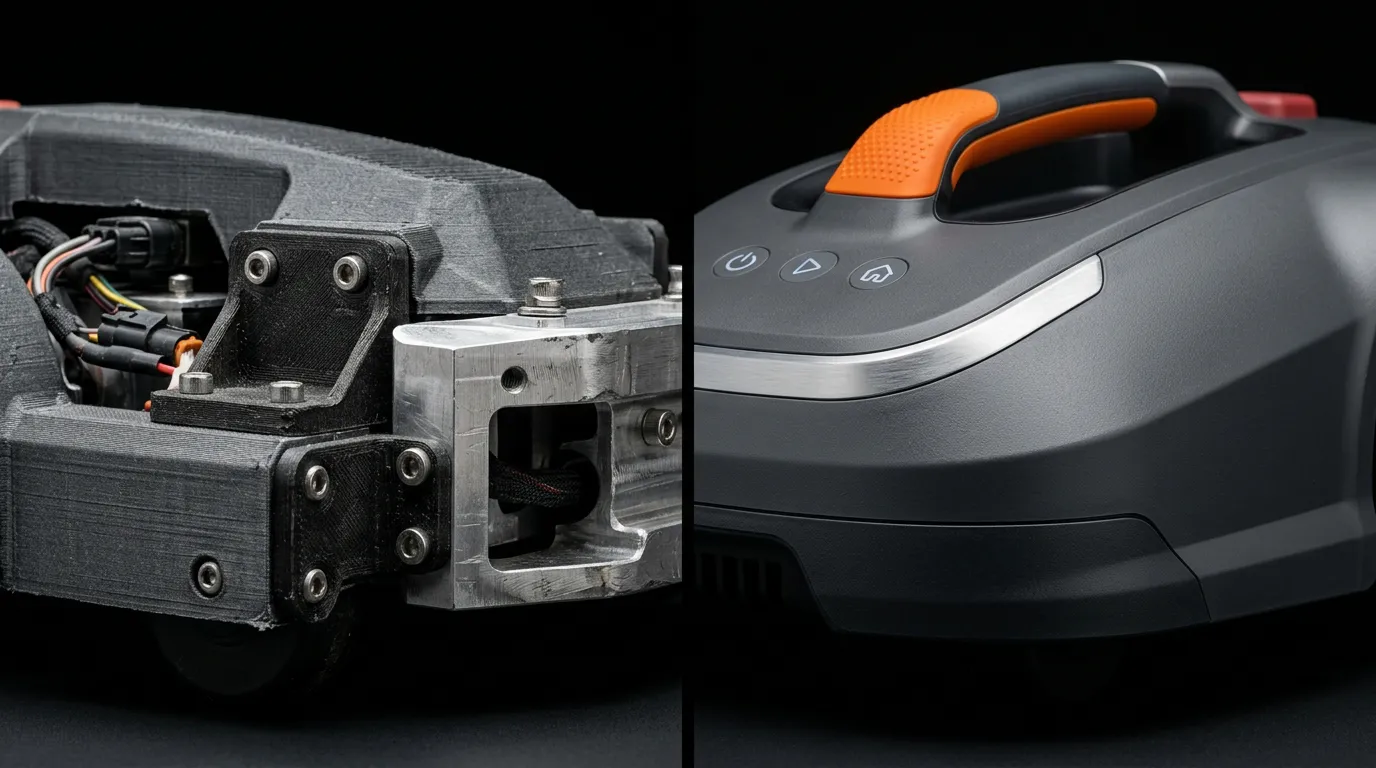
    Functional vs Visual Prototypes: Choosing What to Build First

    [ Article Flow ]

    01

    The Guiding Principle: Addressing Riskiest Assumptions

    02

    How Do Visual and Functional Prototypes Compare?

    03

    What Are the Cost Implications and Trade-offs of Prototyping Methods?

    04

    Lead-Time and Cycle-Time Dynamics

    [ Introduction ]

    When product teams face the critical decision of whether to prioritize a functional prototype or a visual prototype, the most pragmatic approach is to address the highest-risk assumption first. A functional prototype is engineered to test performance, structural integrity, and manufacturability using production-representative processes and materials, typically requiring 8 to 14 weeks of development and budgets between 5K and $80K depending on complexity. It is crucial when mechanical integrity, electrical performance, or manufacturing feasibility are the primary unknowns, since failure modes here cascade into expensive tooling rework downstream. Conversely, a visual prototype focuses on aesthetics, ergonomics, CMF (color, material, finish), and market perception, building in 3 to 6 weeks at a fraction of the cost. It is ideal when market acceptance, user experience, or design appeal are the riskiest assumptions, particularly during seed-stage pitches, customer discovery, or pre-order campaigns where look and feel drive conversion more than internal mechanics. This strategic decision directly impacts development velocity, cost efficiency, and overall risk mitigation in hardware product development.

    This article will provide a rigorous comparison of functional versus visual prototypes, offering a framework for hardware teams to make informed, budget-conscious decisions that accelerate learning and de-risk the product development process.

    [ Chapter 01 ]

    The Guiding Principle: Addressing Riskiest Assumptions

    The core principle for prototype selection is to build the minimum viable prototype that effectively tests your single riskiest assumption. This approach minimizes cost and accelerates the learning cycle. If the primary unknown revolves around user perception, ergonomic comfort, or market fit, a visual prototype delivers the fastest and most cost-effective feedback. However, if the critical risks involve mechanical performance, electrical reliability, or manufacturability, a functional prototype is indispensable.

    This strategy emphasizes learning velocity over mere fidelity. A $500 visual mockup that swiftly disproves a design direction or validates a market need is far more valuable than a $5,000 functional prototype that merely confirms what was already anticipated. Conversely, attempting to validate the load-bearing capacity of a component that needs to withstand 5,000 cycles at 1.2 Nm using only a visual mockup would be a critical failure in risk reduction. The choice must always align with the most pressing technical or market uncertainty.

    Defining Visual Prototypes

    A visual prototype, often called an aesthetic prototype or appearance model, focuses solely on the external form, aesthetics, and sometimes basic ergonomics of a product. These prototypes are crucial for gathering early market feedback, assessing industrial design appeal, and validating user interaction through physical presence. They help teams understand how a product looks and feels, without necessarily replicating its internal workings or full functional capabilities.

    Defining Functional Prototypes

    Functional prototypes, also known as engineering prototypes or working models, are designed to test the operational aspects of a product. Their purpose is to validate mechanical systems, electrical circuits, software integration, structural integrity, and manufacturability for Design for Manufacturing (DFM). These prototypes often use production-representative materials and manufacturing processes to accurately simulate how the final product will perform under various conditions, thereby reducing technical risk before significant investment in tooling.

    [ Chapter 02 ]

    How Do Visual and Functional Prototypes Compare?

    Selecting the right prototype strategy requires a clear understanding of what each type offers regarding technical capabilities, material choices, and cost implications. The following table provides a detailed comparison to guide decision-making, mapping specific project needs to the appropriate prototype fidelity.

    CriteriaVisual PrototypeFunctional Prototype
    Primary GoalAppearance, ergonomics, perceived value, market feedbackPerformance, mechanical/electrical function, assembly validation, DFM
    Typical MaterialsFoam, aesthetic 3D-printed plastics (SLA, FDM), silicone, mock metal finishesEngineering plastics (ABS, PC, Nylon), metals (Aluminum, Steel) via CNC or casting, PCBs, off-the-shelf components
    Tolerance Range±0.5 mm to ±2 mm (visual fit typically)±0.02 mm to ±0.15 mm (dependent on process and material)
    Strength & WearLow; not designed for load, impact, or cycle testingEngineered for specified loads, impacts, fatigue, and environmental conditions
    Surface FinishHigh-fidelity paint, texture, decals to simulate productionFunctional finishes often prioritize material properties; cosmetic finish is secondary or added post-process
    Assembly RealismSimplified assemblies, often glued or snap-fit for appearanceRealistic fasteners, intricate snaps, critical adhesive bonds, validates service access
    Cost Range (per unit)$50 to $800$300 to 5,000+
    Typical Lead Time1 day to 2 weeks2 days to 16 weeks
    Best ForUser perception studies, marketing, investor presentations, ergonomic validation, aesthetic refinementStructural testing, thermal analysis, EMC testing, DFM validation, assembly process verification
    Visual prototypes are excellent for testing desirability. Functional prototypes are non-negotiable for testing feasibility and reliability. A common pitfall is overspending on visual fidelity when technical risks are paramount, or vice-versa.

    [ Chapter 03 ]

    What Are the Cost Implications and Trade-offs of Prototyping Methods?

    Cost is a paramount factor for hardware teams, influencing decisions about which prototype to build and how. The table below outlines common prototyping methods, their typical cost range for single units, and the key engineering benefits they offer, along with typical lead times. These figures represent industry averages and can fluctuate based on complexity, material, and vendor.

    MethodTypical Cost (single unit)Key Engineering BenefitTypical Lead Time
    Foam/Cardboard Mockup 0 to 50Ultra-fast physical sizing, ergonomics, low-fidelity formSame day to 2 days
    SLA/Resin 3D Print (High Detail)$50 to $400High surface detail, aesthetic validation; limited mechanical strength1 to 4 days
    FDM 3D Print (Functional Fit)$20 to $200Durable thermoplastic parts, fit checks, basic mechanical function1 to 5 days
    CNC Machined Part (Metal/Plastic)$75 to ,500Real material properties, tight tolerances (±0.05 mm), structural tests3 to 10 days
    Urethane Casting (Short Run, 5-20 units)$50 to $300 per partProduction-like surface, material feel (e.g., Durometer), limited volume testing7 to 21 days
    Quick-Turn PCB Assembly 50 to $2,000+Electronic functional validation, EMC testing, thermal performance5 to 15 days
    Soft Tooling (Aluminum/P20 Steel)$5,000 to $30,000+Near production-quality parts, material testing, DFM refinement for low volumes (<10,000 units)3 to 8 weeks
    Hard Tooling (Steel)$30,000 to 50,000+Production tooling, high volume (100,000+ units), lowest per-part cost8 to 20 weeks

    For instance, a highly detailed SLA print can typically be produced within 1 to 3 days, achieving feature details as fine as 0.05 mm. CNC machining, while more expensive, can hold tolerances of ±0.05 mm to ±0.1 mm for small parts, crucial for inter-component fit. Large, multi-cavity injection mold tools often cost upwards of $80,000, with lead times that can extend beyond 16 weeks.

    Amortization and Volume Considerations

    The overall cost calculus dramatically shifts with production volume. If a product targets a run of 10,000 units, a $50,000 injection mold tool amortizes at $5 per part in tooling cost alone. If the target is only 500 units, that same tool amortization jumps to 00 per part. In such low-volume scenarios, alternative processes like urethane casting, 3D printing (e.g., FDM for robust parts, SLA for complex aesthetics), or CNC machining for final parts become significantly more cost-effective. The impact on the total BOM (Bill of Materials) must be carefully analyzed for different production volumes.

    [ Chapter 04 ]

    Lead-Time and Cycle-Time Dynamics

    Rapid iteration is critical in product development, making lead time a fundamental consideration for prototype selection. Beyond lead time, cycle time per part is a crucial metric, especially when simulating production processes and verifying DFM.

    ProcessTypical Lead TimeTypical Cycle Time (per part)Notes
    Foam/Cardboard MockupSame day to 3 daysN/AIdeal for immediate tactile and visual feedback
    SLA Resin 3D Print1 to 3 days1 to 8 hours (batch dependent)High detail, smooth finish, but parts can be brittle
    FDM 3D Print1 to 5 days1 to 12 hoursGood for robust, functional parts; visible layer lines
    CNC Single Part2 to 7 days5 to 120 minutesMaterial-dependent; complex geometries increase machining time
    Urethane Cast Part3 to 14 days10 to 60 minutesExcellent for simulating injection molding for small batches
    Injection Tool Build4 to 12 weeksN/ATooling lead time often dictates project schedule; can be up to 16 weeks for complex tools
    Injection Molded PartN/A (after tool completion)15 to 60 secondsVery low per-part cost at high volumes; efficient for DFM validation
    PCB Proto & Assembly3 to 14 days10 seconds to minutesFast for electronics validation; SMT lines efficient after setup

    💡 Prioritize prototyping methods with lead times shorter than your planned iteration cycles. If your design reviews occur bi-weekly, target prototyping methods that deliver results within 7-10 days to maintain momentum and enable swift adjustments.

    For example, a project timeline of 6 weeks would generally preclude building dedicated injection molding tools for initial validation, as tool fabrication alone can exceed this timeframe. Instead, methods like SLA, FDM, CNC, or quick-turn PCB assembly become the viable choices for providing actionable feedback within tight deadlines. Engineers looking to optimize this process often consult a firm specializing in mechanical engineering.

    [ Chapter 05 ]

    The Hidden Costs and Realities of Prototyping: What Fails in Practice?

    Vendor quotes often present an idealized view of prototyping costs, focusing primarily on part creation. However, the true cost of bringing a prototype to engineering readiness - irrespective of whether it's visual or functional - involves several hidden factors that often catch product teams off guard. Ignoring these can lead to significant budget overruns, schedule delays, and costly rework. The most common mistake is underestimating these critical post-creation expenses.

    One major hidden cost is post-processing labor. A quoted 3D-printed part rarely arrives ready for end-user interaction. Achieving a production-quality surface finish, whether through sanding, vapor smoothing, painting, or applying decals, can add 00 to $500 per part in labor and materials for a single unit. Similarly, while CNC machining quotes specify machine time, they frequently omit the 4 to 20 hours required for fixture design and setup, which is essential for accurate machining and can significantly impact the per-part price for low volumes.

    Tight tolerancing is another area where costs can escalate rapidly. While a quote might list a general tolerance of ±0.5 mm, specific critical features might require ±0.05 mm for proper function. Achieving such tight tolerances can increase CNC machining costs by 30% to 200% and introduces additional metrology expenses. For injection molding, small changes in draft angles, wall thickness, or radii to meet DFM guidelines, if discovered late, can result in tens of thousands of dollars in tool modifications and weeks of delay during phases like EVT (Engineering Validation Test) or DVT (Design Validation Test).

    Furthermore, assembly and serviceability validation are rarely included in initial prototype quotes. A prototype that appears whole for a photo shoot might use glue or non-representative fasteners, masking complex assembly sequences or difficult service access. Discovering these issues during DFM validation or pilot production can force expensive redesigns, retooling, and substantial schedule slips. Robust assembly validation often requires creating multiple units or even a small pilot run.

    Finally, the costly oversight of test instrumentation and fixturing for functional prototypes is often overlooked. To rigorously test a component (e.g., for 5,000 cycles or specific load conditions), custom jigs, fixtures, or dedicated test rigs are necessary. A simple fixture for a drop test or a custom sled for an impact test can range from ,000 to 5,000 to design and fabricate, an expense rarely integrated into initial part quotes and not accounted for in the initial BOM (Bill of Materials).

    ⚠️ Warning: Always add a contingency budget of 20% to 50% above initial vendor quotes for prototyping. This buffer accommodates essential post-processing, unforeseen tolerance requirements, assembly validation, and necessary test fixturing. Underestimating these factors is a common and costly mistake in hardware development.

    [ Chapter 06 ]

    When Are Functional Prototypes Non-Negotiable?

    Functional prototypes are indispensable when the critical unknowns are tied directly to product performance, reliability, and manufacturing viability. In these scenarios, bypassing rigorous functional testing introduces unacceptable technical and financial risks.

    1. 1Structural Integrity and Fatigue Testing: For components requiring specific mechanical strength, load-bearing capacity, or fatigue resistance, functional prototypes are mandatory. For example, validating a bracket designed to survive 5,000 cycles under a 1.2 Nm torque load demands a CNC-machined prototype in the final material, costing anywhere from $250 to ,000, used in conjunction with a custom test rig (which can range from ,000 to $5,000). A visual prototype would provide absolutely no insight into such failure modes.
    2. 2Thermal Management and Environmental Sealing: If a device must effectively dissipate over 5W within a compact enclosure or maintain an IP67 water/dust ingress rating, an aesthetic prototype is insufficient. This requires functional prototypes made from production-representative materials, carefully sealed, and often equipped with integrated sensors. Costs for such prototypes, designed for realistic thermal/sealing tests, typically range from $500 to $4,000.
    3. 3Electronics Performance and EMC Compliance: Any product containing electronics necessitates functional prototypes to validate circuit performance, power consumption, signal integrity, and electromagnetic compatibility (EMC). Quick-turn PCB assembly and populated board prototypes are crucial for these tests, with typical costs ranging from $200 to $2,000+ per board, depending on complexity and component count. Skipping this step often results in expensive re-spins or regulatory compliance failures. Teams often leverage services like electronics design to mitigate these risks.
    4. 4Assembly Sequence and DFM Validation: Before committing to high-cost tooling, validating the product's assembly sequence, part-to-part fit, and general manufacturability (DFM) is vital. This often involves creating a small run of parts via urethane casting or CNC machining ($50 to $800 per part) to physically assess how components fit together, identifying potential interferences, difficult assembly steps, or areas needing design optimization. This early validation can prevent expensive, multi-week tool modifications down the line, especially when considering MOQ (Minimum Order Quantity) requirements for production parts.
    Functional prototypes are not just about preventing failure; they are about understanding the fundamental physics of your product, mitigating future warranty claims, and ensuring regulatory compliance. The initial investment in these prototypes is a fraction of the cost of post-launch product recalls or design changes.

    [ Chapter 07 ]

    What Strategic Advantages Do Visual Prototypes Offer?

    While functional validation is critical, visual prototypes offer distinct strategic advantages, particularly in the earlier stages of product development where market acceptance and user experience are key unknowns. They allow for rapid, cost-effective validation of design appeal and ergonomics before significant engineering investment.

    1. 1Market Validation and User Perception: For gathering early qualitative feedback on aesthetic appeal, perceived value, and brand identity, visual prototypes are highly effective. A well-finished visual model, costing between 50 and ,500, enables user testing that can inform color choices, material textures, and industrial design language. This process is significantly faster and more economical than producing a fully functional prototype for mere aesthetic feedback. Companies often use this stage to refine their vision with industrial design services.
    2. 2Ergonomic and Form Factor Assessment: For products designed for human interaction (e.g., handheld devices, wearables, office furniture), visual prototypes are essential for ergonomic testing. Simple foam or 3D-printed models, ranging from $20 to $400, can quickly validate human factors such as grip comfort, weight distribution, button placement, and overall size perception, without needing complex internal mechanics.
    3. 3Investor Pitches and Marketing Material: For securing funding, engaging partners, or generating pre-launch media buzz, a polished visual prototype is invaluable. A high-fidelity SLA or CNC-finished model, expertly painted and assembled, can cost from $400 to $3,000. This conveys a strong product vision and professional execution, making a far greater impact than conceptual renderings or unfinished functional prototypes.
    4. 4Early Industrial Design Iteration: When exploring multiple aesthetic directions for a product, visual prototypes allow for quick, parallel evaluation. Producing 2-3 distinct visual concepts using 3D printing and basic finishing can cost under ,200 total, enabling industrial designers to rapidly compare forms and identify the most promising direction for subsequent engineering efforts.
    Visual prototypes minimize sunk engineering costs when the primary goal is to validate desirability. They are an agile tool for filtering out unpopular or unergonomic concepts early in the design cycle.

    [ FAQ ]

    Common Questions

    Answering "functional vs visual prototypes" is crucial: A functional prototype rigorously tests performance, DFM, and structural integrity with production-level materials. A visual prototype (or aesthetic model) primarily assesses appearance, ergonomics, and market perception.

    Beyond direct manufacturing costs, budget an additional 20% to 50% for post-processing (sanding, painting, assembly labor), specialized test fixturing, design changes due to DFM findings, and potential re-spins for tighter tolerances. Complex products requiring regulatory testing or custom validation equipment may need an additional ,000 to 5,000 for test rig development, which contributes significantly to the overall BOM.

    For a two-week sprint, prioritize methods with very short lead times. These include foam or cardboard mockups (1-2 days), SLA or FDM 3D printing (1-5 days), and quick-turn CNC machining (3-7 days). For electronics, rapid PCB prototype and assembly (5-10 days) fits this window. Avoid multi-week processes like urethane casting for initial iterations, and definitely avoid hard tooling, as these will stall your iteration cycle.

    Yes, this is known as a hybrid prototype. These combine the functional internals (e.g., a working PCB, CNC-machined components) with a high-fidelity aesthetic exterior (e.g., a polished SLA shell or an urethane cast enclosure). Hybrid prototypes increase complexity and cost but are ideal when both technical validation and user experience assessment must occur concurrently. Costs for hybrid prototypes can easily exceed $5,000 to $20,000 due to the integration of complex systems.

    The transition to hard tooling should occur when your product's DFM is thoroughly validated, all critical functional requirements are met, and market testing indicates strong demand at the projected volume and cost. Generally, if you anticipate production volumes exceeding 10,000 units, hard tooling becomes economically sensible due to lower per-part costs. Often, a small-batch run (e.g., 50-200 units) via urethane casting or soft tooling is conducted after prototyping but before committing to high-cost steel tools, to catch final DFM issues and understand MOQ implications.

    O

    [ Author ]

    ONMOTIO Team

    ONMOTIO's editorial and engineering team writes about industrial design, mechanical engineering, prototyping, and what it actually takes to move a physical product toward manufacturing.

    READY TO BUILD
    IT RIGHT?

    Let's turn your idea into a manufacturable, market-ready product.

    START A PROJECT